Tag Archives: wine cellar cooling

Wine Cellar Cooling | About Lighting, Temperature & Humidity

“Wine makes every meal an occasion, every table more elegant, every day more civilized.” – Andre Simon, “Commonsense of Wine”


“A meal without wine is like a day without sunshine.” – Anthelme Brillat Savarin


How important or special to you is wine? How do you value wines? What do you do to protect your own collection of wines?

Wine is treated by many not just as a beverage but something that has been part of their lives, may it be in times of happiness or in times of sorrow. That is how important wine is for us here at US Cellars Systems – we treat them as precious possessions that can make a significant impact in a person’s life.

Preserving your wines, protecting them from the harmful effects of certain environmental factors and providing them the best storage conditions possible are some of the ways of pampering them, just like pampering your favorite pet.

So what can you do to provide nothing but the best for your wines?

There are actually different requirements for you to be able to preserve your wines and let them age to perfection. There’s lighting, temperature, humidity, insulation and a lot more.


The Right Lighting 

Direct exposure to sunlight, UV light or incandescent light can lead to possible wine faults.  In order to protect the wine from harmful rays, they are bottled in darkly tinted wine bottles.  Another way of protecting your wine collection is by storing them in dark environments which can be provided by wine coolers, wine cabinets, and wine cellars.  Wines are also stored in boxes or crates to shield them from direct light.


The Right Humidity 

Humidity is responsible for keeping the cork from drying out.  When the cork starts to dry out, it causes oxygen to seep through into the bottle which eventually leads to wine spoilage.  Wine bottles should be stored in an environment that maintains a 70% humidity level which is considered to be ideal.

Excessive wine cellar humidity can contribute to mold growth. Although mildew will not affect the contents of the wine bottle, it can do considerable damage to the label.  This should not be much of an issue unless you intend to resell your bottle of wine.   Conversely, if the wine cellar humidity level is too low, it runs the risk of the cork drying out.

There are useful instruments that can help determine the level of humidity.  A hygrometer or humidity sensor can provide an accurate reading of humidity in your storage environment.

One of the surest ways to maintain the ideal wine cellar humidity is with the use of a wine cellar cooling system, particularly the type which has a humidity control system.


The Right Temperature 

The most important of all external factors in wine storage is temperature.  Wine is easily influenced by fluctuations in temperature.   Wine bottles should be stored in an environment that maintains a temperature within the 55 – 60°F range which is considered to be the ideal temperature for storing and aging.

If exposed to too high a temperature, it can hasten the aging process of the wine and even give your wine a ‘cooked’ flavor.  If exposed to a wine cellar temperature that is too low, it can lead to a variety of wine faults one of which is stopping the aging process altogether.

Our wine cellar cooling systems come in different styles and specifications that can meet your wine storage requirements and most importantly, maintain the ideal wine cellar temperature.


Take a look at these products:

Rack Mounted Wine Cellar Refrigeration Units

Rack Mounted Wine Cellar Refrigeration Unit

Vertical Rack Mounted Wine Cellar Refrigeration Units

Vertical Rack Mount Wine Cellar Cooling Units

Other External Factors

Aside from the three aforementioned external influences, vibration and odor can also affect the overall condition of your wine.

Vibration is said to expedite the aging process along with stirring up the sediments at the bottom of the bottle  creating the most adverse effects to your wine collection. Therefore it is highly recommended that you store your wines in areas free of vibratory motion.

Here at US Cellar Systems, we know that noise can produce vibration, and this inspired us to create virtually quiet wine cellar cooling units such as our Low Profile Quiet Wine Cellar Cooling Units.

Due to the porous nature of the cork, wine is susceptible to natural agents, particularly air, which is why making sure your storage area is free from strong smells is so important. Odor can also have damaging effects on those wine bottles that you have opened and resealed especially when placed in confined spaces with little ventilation.  With this in mind, it is imperative that you store your wine collection in areas that is clear of food, chemical, and household odors.

The orientation of the bottle must also be taken into consideration when you talk about proper wine storage.  Although there are certain wines that age better when kept upright, Champagnes and sparkling wines for instance, most wine bottles are stored on  their side allowing the cork to stay moist as it maintains contact with the wine.


Take a look at our wine cellar cooling systems and tell us which one interests you the most and why.


Contact us here.

Updated Trade Discount Pricing Wine Cellar Cooling & Refrigeration Units

Updated Discounts for Volume Dealers, Trade and HVAC Contractors. Changes across the board, MSRP’s and Costs for April – May 2012.

We are trade only innovative wine cellar refrigeration suppliers providing Wine Cellar Builders with highly configurable cooling equipment for custom wine cellars, commercial wine displays and cabinets.

Our pricing is volume based and highly competitive. Get your copy of the latest TRADE ONLY pricing catalogue today. Simply call +1 (562) 513-3017 or complete a contact request form.

Wine Cellar Cooling Trade Pricing

While a few products have increased in price we would like to thank our regular trade partners for an excellent year in 2011 and pass on some of our new lower rates which we were able to negotiate due to increased sales volumes.

In particular we have been able to create better trade prices for our HS (High Static) cooling units & LPQ (Low Profile Quiet) cooling system, CC Cabinet & Closet Wine Cooling Units, three of our highest volume sellers for 2011.

Call us today and get the latest TRADE ONLY Discount Pricing.

Wine Cellar Cooling and Playing with Physics in New England Massachusetts

Anyone who buys active wear these days is familiar with the phrase “moisture wicking”. What does that have to do with Wine Cellar Cooling Units, we hear you ask?

Unlike cooling systems in wine cellars, modern fabrics can pull moisture off the skin, pass it through the clothing, and dry it quickly. It’s a certainly great improvement to comfort and the effectiveness of the clothing in sports and extreme conditions.

Playing with the physics of a wine cellar does just the opposite. A custom wine cellar can actually promote moisture migration, this effect is actively compounded by the addition of wine cellar refrigeration equipment. This is why protections like a vapor barrier are vital and not just precautionary.

Mold and mildew are a possibility in any basement. Wine cellar cooling units installed in custom wine cellars which have not been constructed properly dramatically increases those odds.

We were recently working with a wine cellar builder in the New England area in Massachusetts. In this case contractor’s project was to add a HS (High Static) Wine Cellar Cooling System to a finished room in a basement that has been serving as a wine cellar for several years. The average temperature in the room is just a little higher than the customer wants. The customer is happy with the look of the room as it is. He does not mind the investment of adding refrigeration equipment but is resistant to the expense of adding a vapor barrier.

This is the point the builder / contractor needs to become 1 part salesman, 2 parts expert.

The customer wants their wine cellar builder to be expert, so the sales part should be simple, right?

Not really. To sell the customer on the complete idea turned out to be challenging. Should the builder just do what the client wants, install the cooling system without a vapor barrier? Then when problems arise down the road they can at least say “well, we told you so”!

Mold and moisture problems build up slowly over time, look ugly, do not smell good and are difficult to get rid of.

On the other hand, doing the job correctly and including critical details the customer doesn’t think they want but still giving him the finished product can clearly take some finesse.

The customer may not understand why details like a vapor barrier are important. Therefore it is not valuable to him. This is why being “perceived” as an expert is doubly important. The best way to prove to yourself or others you are an expert is to be able to explain the topic in understandable and relevant terms to someone else. The customer needs reassurance that he is making the right choice without feeling up-sold.

Need help with issues like this? Wine Cellar Refrigeration Systems are always here to help you. Simply call us at +1 (562) 513-3017 or complete a wine cellar cooling simple contact request form and we will be happy to contact you.

We will keep adding relevant topics to our wine cellar cooling technical pages and on our YouTube Channel. Making them your go-to place for reference data and sales support. We are also just a phone call away for direct support.

What do wine cellar cooling systems in New England, Massachusetts have in common with “Active Wear“? The physics of wine cellar cooling units – The answer is… Nothing, they are opposites!

Wine Cellar Cooling Units – Technical Pages update for the TRADE

Here at US Cellar Systems aka wine cellar refrigeration systems .com we are pleased to announce that we have completed phase one of our project to create a series of technical “how-to” pages aimed at providing comprehensive advice on the best ways to install and maintain wine cellar cooling units in both residential home and commercial wine cellar cooling rooms, cabinets and purpose built storage rooms.

This series along with PDF downloadable documents was created in response to requests from our trade partners, local HVAC contractors and installation engineers. The series covers a comprehensive series of topics which include such things as, basic construction of a wine cellar, insulation and vapor barriers, when to use split system wine cellar cooling systems vs. through the wall systems, maintenance schedules and advice though to control logic and digital controller wiring and cooling system set-up procedures.

List of the various topics covered – Wine Cellar Cooling Units & Systems

Wine Cellar Cooling Insulation & Construction

Wine Cellar Cooling Insulation R-Value

Through the wall vs. Split Wine Cellar Cooling Units 

Wine Cellar Cooling Units Maintenance

Wine Cellar Cooling Control Logic

Wine Cellar Cooling Systems Voltage & AC Frequency

Wine Cellar Cooling Systems & Joining Dissimilar Metals

Wine Cellar Cooling Systems Automatic Expansion Valves

Wine Cellar Cooling Systems Temperature Monitoring

Wine Cellar Cooling Units Line Set Recommendations

Wine Cellar Cooling Units Diagnostic Form

Wine Cellar Cooling Units Digital Controller Wiring

Wine Cellar Cooling Evaporator Coil Wiring

We hope you enjoy our wine cellar cooling technical pages series. If you have a question, or feel there is a topic that it would be helpful if we covered, simply leave a comment at the bottom of this page and we will see what we can do to accommodate your request!

Wine Cellar Cooling Units – DC & Evaporator – Training & Our YouTube Channel

Hi all, we just finished adding a new video series “Training for HVAC Contractors – Wine Cellars Refrigeration Digital Controllers” all about how to wire, install and set-up wine cellar cooling unit digital controllers. We also cover how to connect the controller to the evaporator coil. we hope you find these videos helpful!

You can watch all the videos below or the first one in the series here Wine Cellar Cooling and Refrigeration Units – Installation Digital Controllers Wiring

If you click here Wine Cellar Cooling it will take you to our YouTube Channel where you can “SUBSCRIBE” and be automatically be notified when we add additional videos!

Wine Cellar Refrigeration Units by US Cellar Systems LLC

Rack Mounted Wine Cellar Cooling Unit – Installed in Baton Rouge Louisiana

This residential wine cellar project in Baton Rouge, Louisiana required a cooling solution capable of maintaining stable wine storage conditions while integrating seamlessly into the cellar’s custom racking design. The homeowner wanted a system that would provide reliable temperature and humidity control without detracting from the appearance of the wine cellar itself.

To meet these requirements, a rack-mounted wine cellar cooling system featuring a twin-evaporator configuration was selected. The system was designed to deliver consistent airflow, efficient cooling performance, and discreet integration within the cellar’s architecture, helping preserve both the functionality and aesthetics of the space.

Wine cellars located in Louisiana face unique environmental challenges due to the region’s high humidity levels and extended cooling season. Maintaining proper storage conditions requires more than simply lowering the temperature—it requires a carefully engineered climate-control solution that can protect a wine collection from fluctuations in temperature and moisture over time.

This project demonstrates how a properly designed rack-mounted wine cellar cooling system can provide reliable climate control while remaining virtually hidden within the overall cellar design.

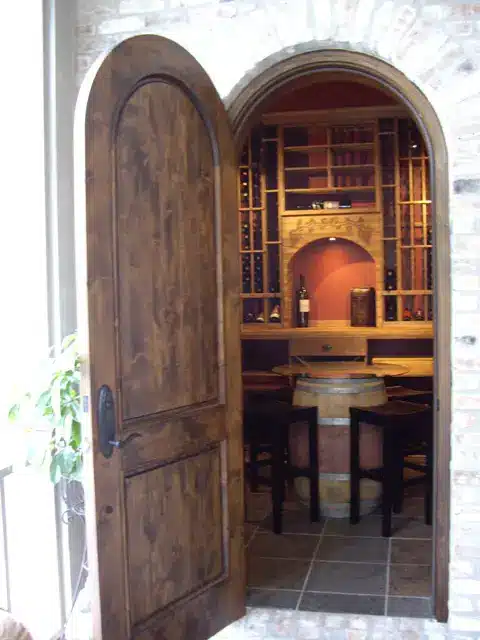
Charming, traditional wine cellar cooled efficiently by US Cellar System’s rack mounted wine cellar cooling unit.

Project Overview

Every wine cellar project begins with understanding the environmental demands of the space and selecting a cooling solution capable of maintaining consistent storage conditions year-round.

For this Baton Rouge installation, the objective was to create a wine storage environment that would support long-term wine preservation while maintaining the visual appeal of the cellar. The cooling system needed to integrate into the custom racking design, minimize visual impact, and provide dependable temperature and humidity management.

Because wine is highly sensitive to environmental fluctuations, maintaining stable cellar conditions is essential. Excessive heat, low humidity, or rapid temperature swings can negatively affect aging potential, flavor development, and overall wine quality.

By selecting a properly engineered cooling solution, the project was able to achieve both aesthetic and performance goals.

Cooling Challenges in Baton Rouge

Louisiana’s climate presents unique challenges for wine cellar refrigeration systems.

High outdoor temperatures, elevated humidity levels, and long cooling seasons place continuous demands on cellar cooling equipment. Without proper design and engineering, these environmental conditions can lead to excessive moisture, condensation issues, and temperature instability inside the cellar.

For wine collectors, protecting a collection requires maintaining an environment that remains consistent regardless of outdoor conditions.

Several factors contribute to long-term wine cellar performance:

  • Proper insulation
  • Continuous vapor barriers
  • Airtight cellar doors
  • Balanced air circulation
  • Correct cooling system sizing

When these elements work together, a cellar can maintain the ideal wine storage environment of approximately 55°F and 60–70% relative humidity.

Wood can warp easily when exposed to unsuitable conditions. Our rack mounted wine cellar cooling system ensures your racks and wines stay protected and last a long time.

Why a Rack-Mounted Cooling Unit Was Selected

The cooling system selected for this project needed to provide dependable performance while preserving the clean appearance of the wine cellar.

Rack-mounted wine cellar cooling systems offer an effective solution when homeowners want to minimize the visibility of refrigeration equipment. Rather than placing large mechanical components prominently within the room, rack-mounted systems allow the evaporator assembly to be incorporated into the wine racking itself.

This approach offers several advantages:

  • Reduced visual impact
  • Efficient use of cellar space
  • Improved design flexibility
  • Consistent airflow distribution
  • Quiet operation

By integrating the cooling system into the cellar’s architectural design, the project was able to maintain a refined appearance while still delivering the environmental control necessary for proper wine storage.

RM6600 Rack-Mounted Wine Cellar Cooling System

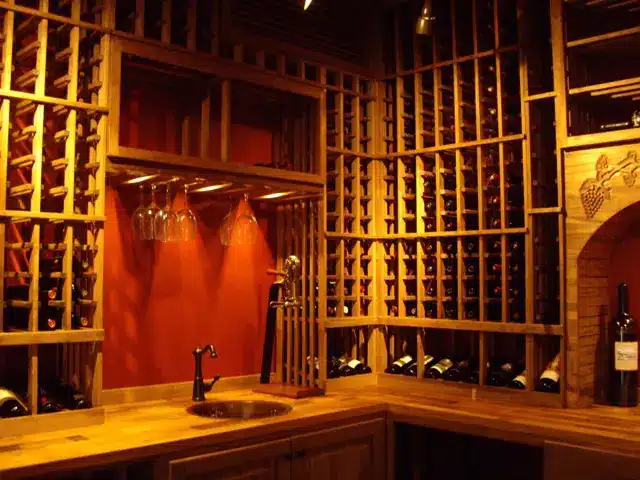
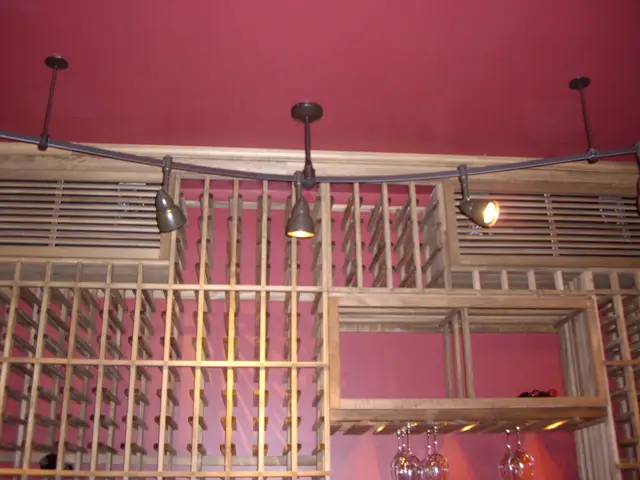
Your wine cellar’s aesthetics don’t have to be sacrificed — this RM6600 was well hidden in plain sight!

To meet the cooling requirements of this project, an RM6600 rack-mounted wine cellar cooling system was installed.

The RM6600 is designed to provide reliable refrigeration performance while allowing the evaporator components to remain discreetly integrated within the cellar design. Its split-system configuration separates the condensing unit from the evaporator assembly, helping reduce operational noise and increasing installation flexibility.

For this Baton Rouge wine cellar, the system utilized a twin-evaporator configuration to improve airflow management and temperature consistency throughout the space.

Benefits of a Twin-Evaporator Configuration

Large wine cellars and complex room layouts often benefit from multiple evaporators because they improve air distribution and help maintain more consistent environmental conditions.

Key benefits include:

  • More uniform temperatures throughout the cellar
  • Reduced hot and cold spots
  • Improved airflow circulation
  • Enhanced cooling efficiency
  • Greater environmental stability for wine storage

The twin-evaporator design helps ensure that conditioned air reaches all areas of the cellar, supporting consistent storage conditions across the entire collection.

Concealed Cooling System Integration

One of the most important objectives of this installation was preserving the visual character of the wine cellar while maintaining dependable cooling performance.

Evaporator Placement

The evaporator assemblies were integrated within the wine racking system, allowing the cooling equipment to remain largely hidden from view.

Concealing the equipment within the cellar architecture provides several benefits:

  • Cleaner visual presentation
  • Better integration with custom racking
  • Preservation of display aesthetics
  • Efficient conditioned-air delivery

The result is a wine cellar where the focus remains on the collection itself rather than the mechanical equipment supporting it.

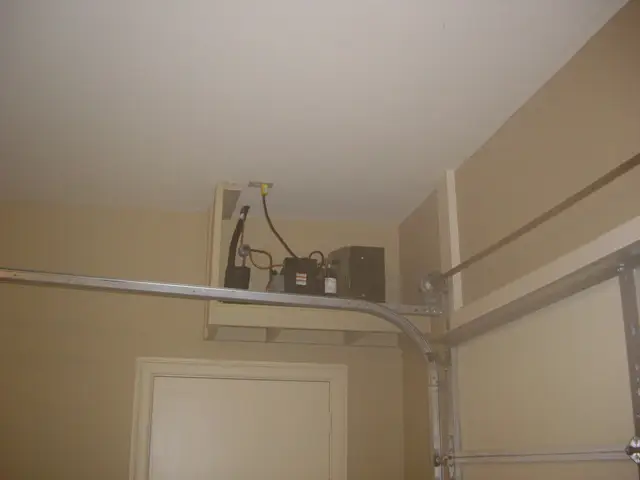
Actual condenser of the RM6600.

Condensing Unit Placement

The condensing unit was installed remotely from the wine cellar.

Remote installation offers several advantages, including:

  • Reduced operational noise
  • Improved heat management
  • Easier service access
  • Increased design flexibility

Separating the condensing equipment from the cellar environment contributes to both performance and user comfort while simplifying future maintenance requirements.

Key Design Considerations for Wine Cellars in Hot, Humid Climates

Projects located in warm, humid regions require careful planning to ensure reliable cooling performance and long-term wine protection.

Accurate Heat-Load Calculations

Proper cooling system sizing begins with a thorough heat-load analysis. Factors such as room dimensions, insulation levels, glass exposure, door construction, and ambient temperatures all influence cooling requirements.

Proper Cellar Construction

Even the most advanced cooling system cannot compensate for inadequate cellar construction. Insulation, vapor barriers, and airtight construction are critical components of a successful wine cellar.

Airflow Management

Consistent air circulation helps eliminate temperature stratification and ensures that all areas of the cellar remain within the desired storage range.

Service Accessibility

Planning for future equipment maintenance is an important part of cellar design. Accessible equipment locations can simplify service procedures and extend the lifespan of the cooling system.

Matching Equipment to the Project

Every wine cellar is unique. Selecting the appropriate cooling system requires evaluating the specific environmental conditions, room layout, storage capacity, and performance expectations of the project.

Reliable Climate Control for Long-Term Wine Storage

This Baton Rouge wine cellar project demonstrates how a properly engineered rack-mounted cooling system can provide dependable environmental management while remaining virtually invisible within the cellar design.

By combining thoughtful cellar planning with an appropriately sized RM6600 cooling system, the installation achieved consistent temperature control, balanced airflow, and efficient humidity management. The result is a climate-controlled environment designed to support the long-term preservation and enjoyment of the homeowner’s wine collection.

For wine collectors, proper refrigeration is one of the most important investments that can be made in protecting a collection. A professionally designed cooling system helps ensure that wines can age gracefully while remaining shielded from the environmental fluctuations that can compromise quality over time.

Need Help Choosing a Wine Cellar Cooling System?

Every wine cellar has unique cooling requirements. Whether you’re building a new wine cellar, renovating an existing space, or upgrading older refrigeration equipment, selecting the right cooling system is essential for maintaining proper storage conditions.

CONTACT US to discuss your project, request a cooling system recommendation, or connect with an authorized dealer who can help determine the best solution for your wine cellar.


New Video! – Wine Cellar Cooling Cabinet Cooling Series Page

Check out our latest technical video explaining when to use the CC Series Wine Cellar Cooling Units. The CC Series is specifically for wine cabinets and wine closets. Engineered to circulate refrigerated air within small to medium narrow spaces – learn more at https://www.winecellarrefrigerationsystems.com/.

Wine Cellar Cooling Cabinet Cooling Series Page

Wine Cellar Refrigeration Systems – US Cellar Systems a California based company.

Wine Cellar Cooling Units Installed by Coastal Santa Monica

Stable Wine Cellar Climate Control is a critical part of any Custom Wine Cellar. Custom Wine Cellars by Coastal chose the RM Series – Wine Rack Mount Cellar Cooling Units for their recent Custom Wine Room Santa Monica installation in Pacific Palisades in Santa Monica and many others for numerous reasons.

Here you can see the RM Series Wine Cellar Cooling Unit Concealed behind a wooden grill

Rack Mount Wine Cellar Cooling Unit Pacific Palisades Hidden

It is the only split system we are aware of that can be concealed in a wood grill box and louvered grill cover to match the wood species of the cellarage without voiding the manufacturer’s warranty. This is a desirable feature as it eliminates unsightly equipment in the wine cellar. We also recommend and prefer to install, split wine cellar cooling systems as they do not need to mount through the wall to vent heat and noise that self-contained wine cooling systems tend to emit. This makes for a quiet and peaceful environment in the owners home. This is especially important if the wine cellar is also used as a wine tasting room and for entertaining.

The RM split system is also a particularly versatile unit as it can be ceiling or wall mounted. In our experience we have found it to be one of the most reliable, long lasting and quiet systems on the market. In addition and unlike self-contained wine cooling units, it can be serviced on site. This makes for simpler and less disruptive long term maintenance.

Rack Mount Wine Cellar Cooling Unit Exposed

Rack Mount Wine Cellar Cooling Unit Exposed

See the two photos in this post of the Wine Rack Mount Wine Cellar Cooling Unit. One of the evaporator exposed, the second shows how well the unit can be concealed behind the louvered grill cover.

US Cellars Wine Cellar Cooling & Refrigeration Blog 1st Post

Hi Everyone! We are pleased to have our new blog site up and running at last. Here we will endeavor to keep you up to date with the latest developments in Wine Cellar Cooling Units technology generally and Wine cellar refrigeration units specification updates specifically.

In addition we are working on a series of technical bulletins covering such topics as Standard Diagnostic Report Forms which will be available as a download and such things as planning and installation guidelines for split-system piping or “Line Sets”.  We’ll let you know of their availability here first.

We are also adding to our website, PDF download pages for all our products. Already we have added one for the CC Series cooling units which can be found here Wine Cabinet Cooler Units PDF page.

We will also be gradually adding educational and technical videos to both this blog site and out main website. See the first one below which is a simple introduction to the basic components of a refrigeration system such as the Compressor, the Condenser, the Metering device and the evaporator coil, what each component does and how they work together.  Ultimately we will go into much more detail covering specific Wine Cellar Cooling Systems and how they work.

Wine Cellar Cooling System – How It Works